A HIDDEN GEM FOR CORE TRAINING
Jewels Lamm | SEP 4, 2021
corestrength
coreandpelvicfloor
backpain
hippain
coreandincontinence
coreandbreath
A HIDDEN GEM FOR CORE TRAINING
Jewels Lamm | SEP 4, 2021
BEYOND COUNTLESS CRUNCHES
I have always been intrigued by breathing mechanics and how they impact efficiency in everyday movement and athletic performance. It led me to learning about core training to help my female 40+ clients understand pressure management on the abdominal wall and pelvic floor. It turns out that the pelvic floor is a base of the core and diaphragm is the top of the core team (see picture below). Therefore, connecting these two major parts influence my current approach to core training.
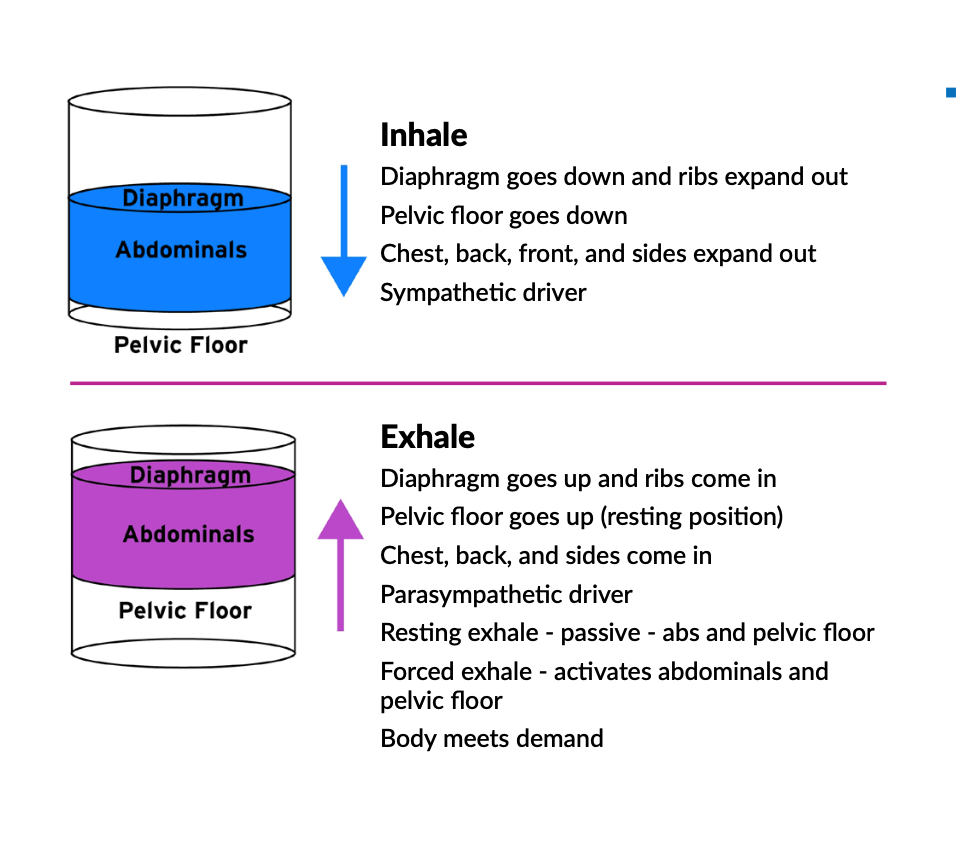
In my training with Dr. Sarah Duvall, she emphasized that restoring breathing is a number one step in core training to stop the leaks (sneeze pee) and close a gap (diastasis recti). Restoring a connection between the respiratory and pelvic floor diaphragm with a 3-dimensional breathing allows a more advantageous positioning for the abdominal wall to do its job of spinal stability and managing pressure.
Yes, working on breathing can be boring unless there is a better understanding why we are focusing on restoring breathing and how it could help us gain more strength, better stability, and more interesting and creative workouts and movements.
After restoring the core breath, I love adding a balloon blowing in mine as well as my as well as my clients’ workouts and movement practices. It becomes more challenging but at the same more fun. Before progressing to the balloon blowing addition, we need to be sure that there are no signs of improper pressure management by implementing a wrong core strategy.
What are the signs of improper pressure management?
Jewels Lamm | SEP 4, 2021
Share this blog post
 OfferingTree